Electricity Cost UK 2026 — Unit Rates, Standing Charges & Saving Tips
UK electricity costs 24.5p/kWh under the Ofgem price cap with a 61p daily standing charge in 2026. Average annual bill: £1,568. Fixed tariffs, smart meters, and off-peak rates can save £200-500/year.
Ofgem Price Cap: How UK Electricity Pricing Works
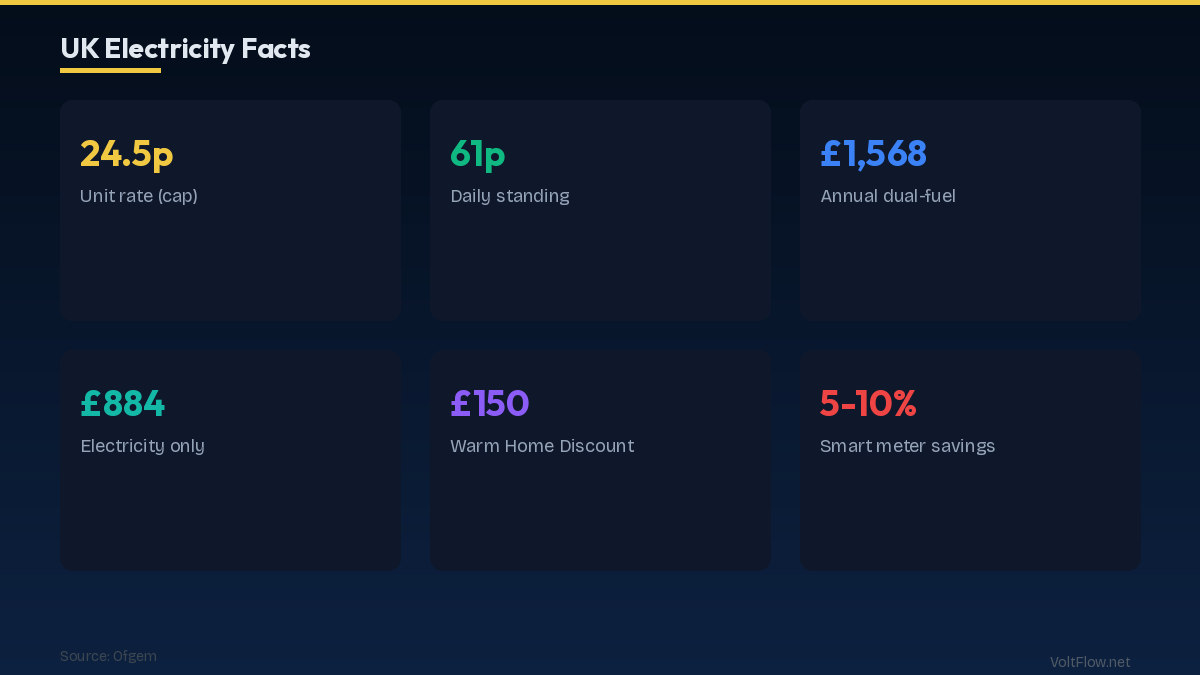
The Ofgem energy price cap sets the maximum unit rate and standing charge that suppliers can charge on default (variable) tariffs. Updated quarterly, the cap for Q1 2026 sets electricity at approximately 24.5p/kWh with a 61p/day standing charge. For a typical dual-fuel household using 2,700 kWh/year of electricity: annual cost is approximately £884 for electricity (£662 for units + £222 standing charge). Combined with gas, the total energy bill is around £1,568. Important: The price cap is NOT a cap on your total bill — it caps the unit rate and standing charge. If you use more energy, you pay more. The cap applies only to standard variable tariffs (SVTs). Fixed tariffs from suppliers may be above or below the cap. Recent trends: After the energy crisis peak of 34p/kWh in 2022-23, rates have settled but remain significantly above pre-crisis levels of 15-18p/kWh. Most analysts expect rates to remain in the 22-28p range through 2026-2027, with gradual declines as wholesale gas prices stabilize and renewable capacity increases.
Fixed vs Variable Tariffs: Which Saves More?
Variable (SVT) tariffs follow the Ofgem cap and change quarterly. They offer flexibility — no exit fees, switch anytime. The risk: if wholesale prices spike, your rate increases at the next cap adjustment. Fixed tariffs lock in a unit rate and standing charge for 12-24 months. In 2026, competitive fixed tariffs are available at 22-26p/kWh — potentially below or near the cap. The advantage: price certainty. You know exactly what you'll pay regardless of wholesale market movements. When to fix: If available fixed rates are below the current cap, fix immediately. If fixed rates are above the cap, stay on variable and monitor. Use comparison sites (Uswitch, MoneySuperMarket, Compare the Market) to check available tariffs weekly — the best deals appear and disappear quickly. Exit fees: Most fixed tariffs have £0-50 exit fees per fuel. Some have none. Always check before signing. If you're within 49 days of your fixed tariff ending, you can switch without exit fees under Ofgem rules. Savings potential: The best fixed tariffs save £100-300/year vs the cap rate. Some energy clubs and collective switching schemes negotiate exclusive rates.
Economy 7 and Time-of-Use Tariffs
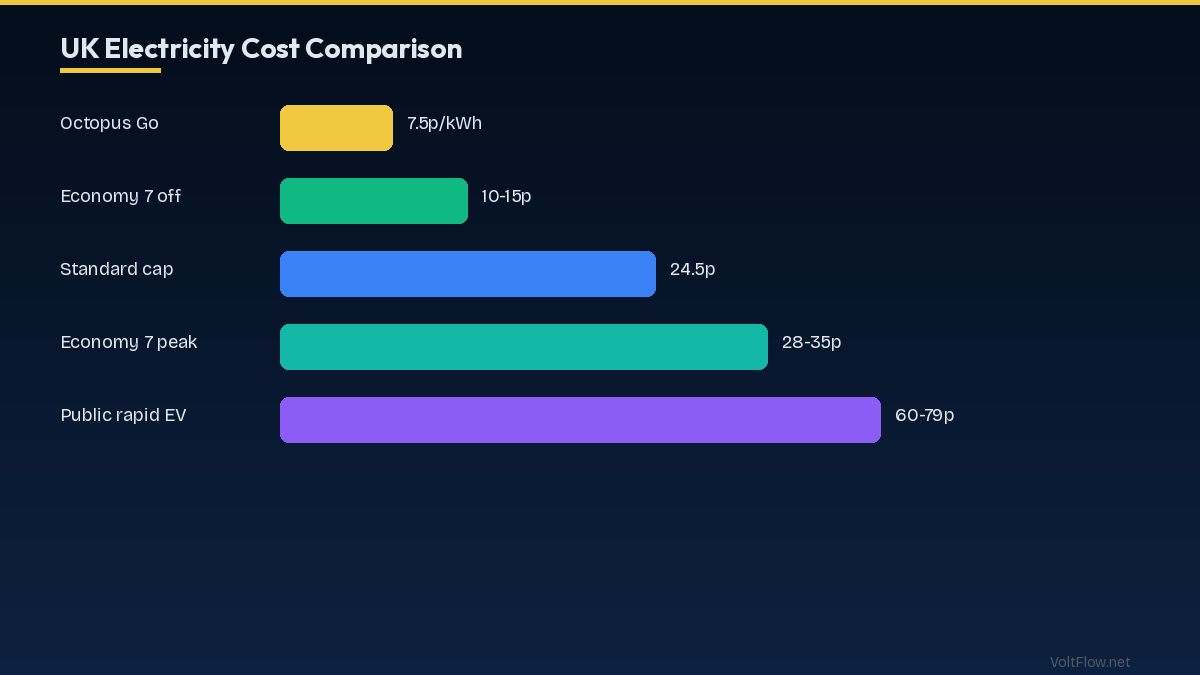
Economy 7 provides 7 hours of cheap off-peak electricity (typically midnight-7 AM) for storage heaters and hot water. Off-peak rate: 10-15p/kWh. Peak rate: 28-35p/kWh. It's only worthwhile if 40%+ of your electricity is used during off-peak hours. Economy 10 provides 10 hours of off-peak across day and night (split into 3 windows). Less common but better for heat pump users. Agile tariffs (Octopus Agile): Half-hourly pricing based on wholesale market rates. Prices swing from -5p/kWh (you get paid to use electricity) during windy/sunny periods to 100p+ during peak demand. Average annual cost is often 10-20% below the cap for households that shift usage. Best with solar, battery, or smart home automation. Octopus Go: A dedicated EV tariff offering 7.5p/kWh between 12:30-4:30 AM. For EV owners charging overnight, this is the cheapest electricity in the UK. Annual EV charging cost on Go: approximately £150-200 for 8,000 miles. Smart meters required: All TOU tariffs need a SMETS2 smart meter. Request one free from your supplier — installation takes 30-60 minutes.
How to Save £200-500 on Your Electricity Bill
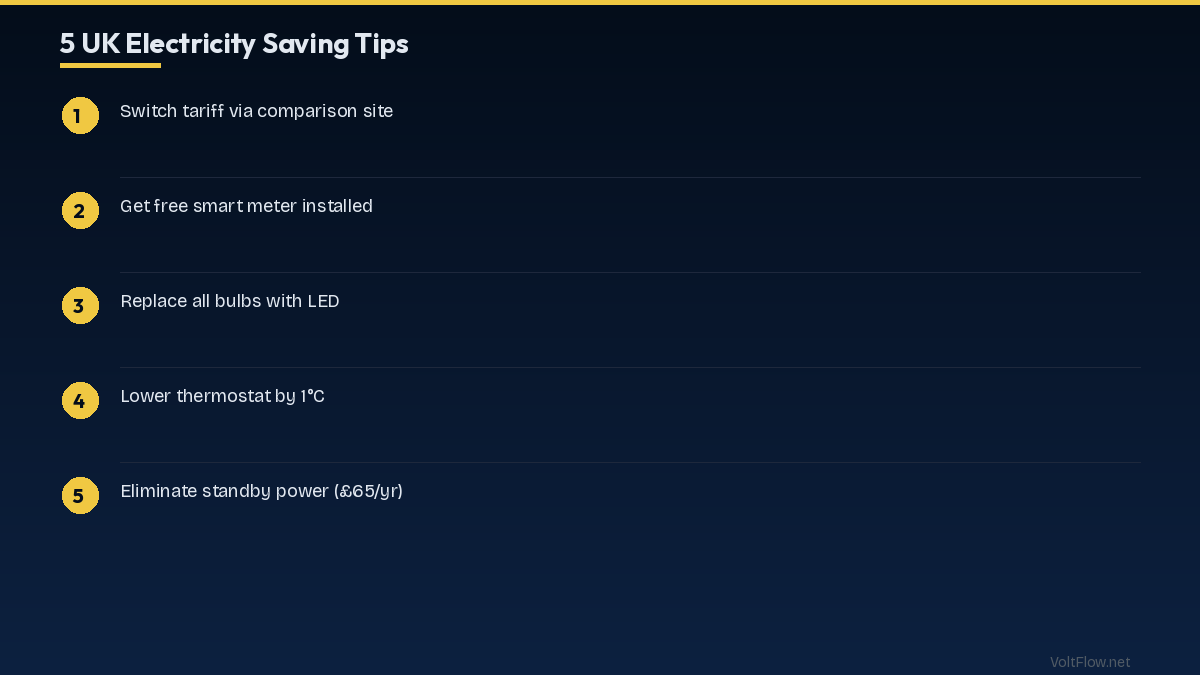
1. Switch supplier/tariff (saves £100-300): Use comparison sites monthly. The cheapest tariff changes frequently. Even saving 2p/kWh on 2,700 kWh = £54/year. Many households are on expensive SVTs when cheaper fixed deals exist. 2. Get a smart meter (saves £50-150): Real-time usage visibility alone reduces consumption by 5-10%. Plus enables TOU tariffs. Free from all suppliers. 3. LED lighting (saves £40-80): Replace all remaining halogen or CFL bulbs with LED. A household with 20 bulbs saves 60-80% on lighting costs. LEDs cost £1-5 each and last 15-25 years. 4. Heating efficiency (saves £50-200): Lower your thermostat by 1°C (saves 10% on heating). Use a smart thermostat (Hive, Nest, tado°) to schedule and zone heating. Bleed radiators annually. Draft-proof doors and windows (£10-50 DIY). 5. Appliance habits (saves £50-100): Wash clothes at 30°C instead of 40°C (saves 40% per wash). Don't over-fill the kettle — boil only what you need. Use the eco mode on dishwashers and washing machines. Turn off standby (UK average: £65/year wasted on standby). 6. Solar panels (saves £300-600): A 4kW system in the south of England generates 3,400 kWh/year, offsetting £830+ of electricity. After Smart Export Guarantee payments, total annual benefit: £900-1,100.
Government Support: Warm Home Discount & Winter Fuel
Warm Home Discount: £150 discount on your electricity bill if you receive Pension Credit or are on a low income. Applied automatically for most eligible households. Check with your supplier. Winter Fuel Payment: £100-300 annual payment for those born before a qualifying date who receive certain benefits. Helps cover winter energy costs. Cold Weather Payment: £25 for each 7-day period when your local temperature drops to 0°C or below. Automatic for eligible benefit recipients. ECO4 scheme: Free or subsidized home insulation, boiler upgrades, and heating improvements for low-income households. Contact your supplier or local authority to check eligibility. Can include loft insulation, cavity wall insulation, and even air source heat pump installation. Energy Company Obligation: Suppliers must help vulnerable customers with energy efficiency measures. This includes free smart thermostats, draft-proofing, and appliance upgrades in some cases. For struggling households: Contact your supplier's hardship team before missing payments. They must offer payment plans, debt support, and cannot disconnect you during winter if you're vulnerable.
Frequently Asked Questions
How much is electricity per kWh in the UK in 2026?
Under the Ofgem price cap, electricity costs approximately 24.5p/kWh with a 61p daily standing charge. Fixed tariffs may offer 22-26p/kWh. Economy 7 off-peak is 10-15p/kWh.
What is the average UK electricity bill in 2026?
The average UK household using 2,700 kWh/year pays approximately £884 for electricity. Combined dual-fuel (electricity + gas) bill: £1,568/year.
How can I reduce my electricity bill in the UK?
Switch to a cheaper tariff (save £100-300), get a smart meter, switch to LED lighting, use a smart thermostat, wash at 30°C, and eliminate standby power. Total potential savings: £200-500/year.
Is Economy 7 worth it in the UK?
Only if 40%+ of your electricity use is during off-peak hours (midnight-7 AM). Good for storage heaters and overnight EV charging. Otherwise, the higher peak rate outweighs the off-peak savings.
What is the Warm Home Discount?
A £150 discount on your electricity bill for Pension Credit recipients and low-income households. Applied automatically by most suppliers. Check eligibility with your energy company.