Smart Meter Benefits UK 2026 — Why You Should Get One
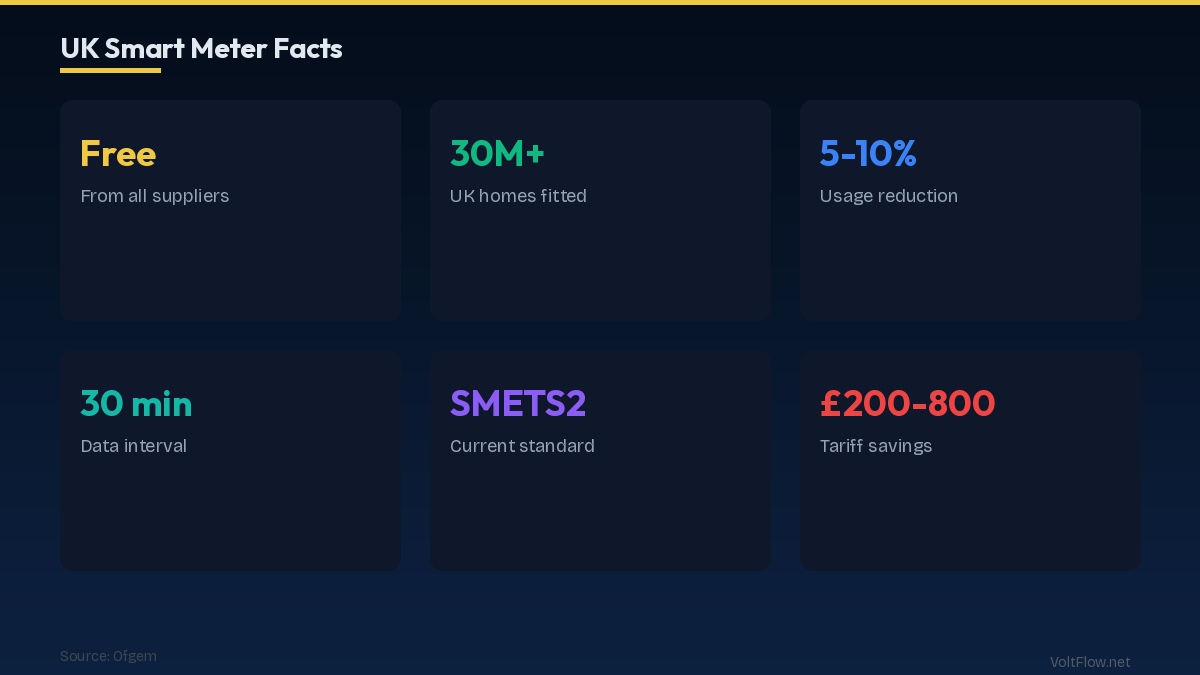
Smart meters are free from all UK energy suppliers and unlock cheaper tariffs, real-time usage data, and accurate billing. Over 30 million UK homes now have one. A SMETS2 meter works with any supplier and enables TOU tariffs like Octopus Go (7.5p/kWh overnight).
What Smart Meters Do and Why They Matter
A smart meter replaces your old gas and electricity meters with digital versions that send readings to your supplier automatically every 30 minutes. In-Home Display (IHD): Every smart meter comes with a free IHD showing real-time electricity and gas consumption in pounds and pence. Studies show households reduce consumption by 5-10% simply from visibility — seeing the cost of leaving lights on or running the tumble dryer changes behavior. For a £1,568/year average bill, that's £78-157/year saved from awareness alone. Accurate billing: No more estimated bills. Your supplier receives actual readings, so you only pay for what you use. This eliminates surprise catch-up bills and overpayment buildups. TOU tariff access: Smart meters enable time-of-use tariffs — Octopus Go (7.5p overnight), Octopus Agile (half-hourly wholesale pricing), and Cosy (heat pump windows). These tariffs can save £200-800/year but REQUIRE a smart meter. Solar export measurement: Smart meters measure both import and export, enabling Smart Export Guarantee payments. Without a smart meter, you can't receive SEG payments for solar.
SMETS1 vs SMETS2: Which Do You Have?
SMETS1 (first generation): Installed 2013-2018. Originally "went dumb" when switching suppliers (lost smart functionality). Most have now been upgraded remotely to work across suppliers via the DCC network. If yours hasn't been upgraded, contact your supplier to request a SMETS2 replacement. SMETS2 (second generation): Installed from 2018 onwards. Works with all suppliers via the Data Communications Company (DCC) network. Full functionality maintained when switching suppliers. Supports half-hourly data for TOU tariffs. Required for Octopus Agile and similar dynamic tariffs. Checking your meter: Look at the meter — SMETS2 meters typically show a serial number starting with "19P" or display "DCC" on the unit. Your supplier can confirm which type you have. Prepayment: Smart meters support prepayment mode (pay as you go) without the need for physical tokens or keys. Top up via app, phone, or at a shop. Useful for budgeting, but standard credit mode is usually cheaper due to better tariff availability.
How to Get a Smart Meter (Free)
All UK energy suppliers must offer free smart meter installation. This is a legal obligation under the Smart Meter Implementation Programme. How to request: Contact your energy supplier by phone, online, or via their app. Request a smart meter installation appointment. Installation process: An installer visits your home for approximately 45-60 minutes. They replace both electricity and gas meters (usually both at once). They install and set up the In-Home Display. They show you how to read the IHD and explain smart features. Your existing tariff is not affected — you keep the same rates unless you actively choose to switch. Common concerns: Safety: smart meters use low-power radio waves (similar to a baby monitor). No evidence of health risks. Data privacy: your half-hourly data is shared with your supplier for billing. You control whether it's shared more broadly. Switching: SMETS2 meters work with all suppliers. You won't lose functionality when switching. What you need: Access to your meter (indoor or outdoor). 45-60 minutes for the installer. A plug socket within 3m of the gas/electricity meter for the IHD.
Smart Tariffs: Saving £200-800/Year
Smart meters unlock tariffs that standard meters can't access. Octopus Go (7.5p/kWh, 12:30-4:30 AM): For EV owners. Charge overnight at 70% below standard rate. Saves £300-500/year on EV charging alone. Octopus Agile (half-hourly pricing): Tracks wholesale electricity prices. Ranges from negative (you get paid) to £1+/kWh during extreme peaks. Average is often 15-20p — below the cap. Best for solar + battery users who can export during expensive periods and import during cheap ones. Annual savings: £200-500 for engaged users. Octopus Cosy (heat pump windows): Cheap electricity during morning and afternoon heating windows. Designed for heat pump households. Reduces heat pump running costs by 20-35%. Agile Outgoing: Variable export rate for solar/battery owners. During winter evening peaks, you can earn 20-40p/kWh exporting from your battery — far more than flat SEG rates. Requirement: All these tariffs need a SMETS2 smart meter and most need a compatible smart device (EV charger, battery inverter, or heat pump with smart controls).
Smart Meters and Home Energy Management
Real-time monitoring apps: Most suppliers offer apps showing your consumption in real time (British Gas, Octopus, EDF). Third-party apps like Loop and Hugo offer enhanced analytics — showing appliance-level breakdown, comparisons with similar homes, and personalized saving tips. Solar integration: Smart meters measure export for SEG payments. When combined with a solar inverter app, you can see generation vs consumption vs export on a single dashboard. Home automation: Smart meter data (via Octopus API or other supplier APIs) can feed into Home Assistant for automated energy management. Example: automatically run the dishwasher when electricity drops below 15p/kWh, charge the battery when prices are lowest, and export when prices peak. Half-hourly settlement: The UK is moving to half-hourly settlement for all electricity consumers. This means your supplier will be charged based on your actual half-hourly usage pattern — creating stronger incentives for time-of-use tariffs and rewarding flexible demand. Smart meters are essential for this transition. Bottom line: A smart meter is free, takes an hour to install, and provides immediate benefits (accurate bills, IHD visibility) plus access to tariffs that can save hundreds of pounds per year. There's no good reason not to get one.
Frequently Asked Questions
Common question about Smart Meter Benefits UK 2026?
See the detailed section on What Smart Meters Do and Why They Matter above for comprehensive information.
Common question about Smart Meter Benefits UK 2026?
See the detailed section on SMETS1 vs SMETS2: Which Do You Have? above for comprehensive information.
Common question about Smart Meter Benefits UK 2026?
See the detailed section on How to Get a Smart Meter (Free) above for comprehensive information.
Common question about Smart Meter Benefits UK 2026?
See the detailed section on Smart Tariffs: Saving £200-800/Year above for comprehensive information.
Common question about Smart Meter Benefits UK 2026?
See the detailed section on Smart Meters and Home Energy Management above for comprehensive information.