Electric Hot Water Running Cost Australia 2026 — By System Type
Electric hot water accounts for 20-25% of Australian electricity bills — costing A$500-1,200/year for a standard resistance system. Heat pumps cut this to A$200-350/year. Switching to off-peak tariff saves 30-40% instantly. Here's the complete running cost breakdown.
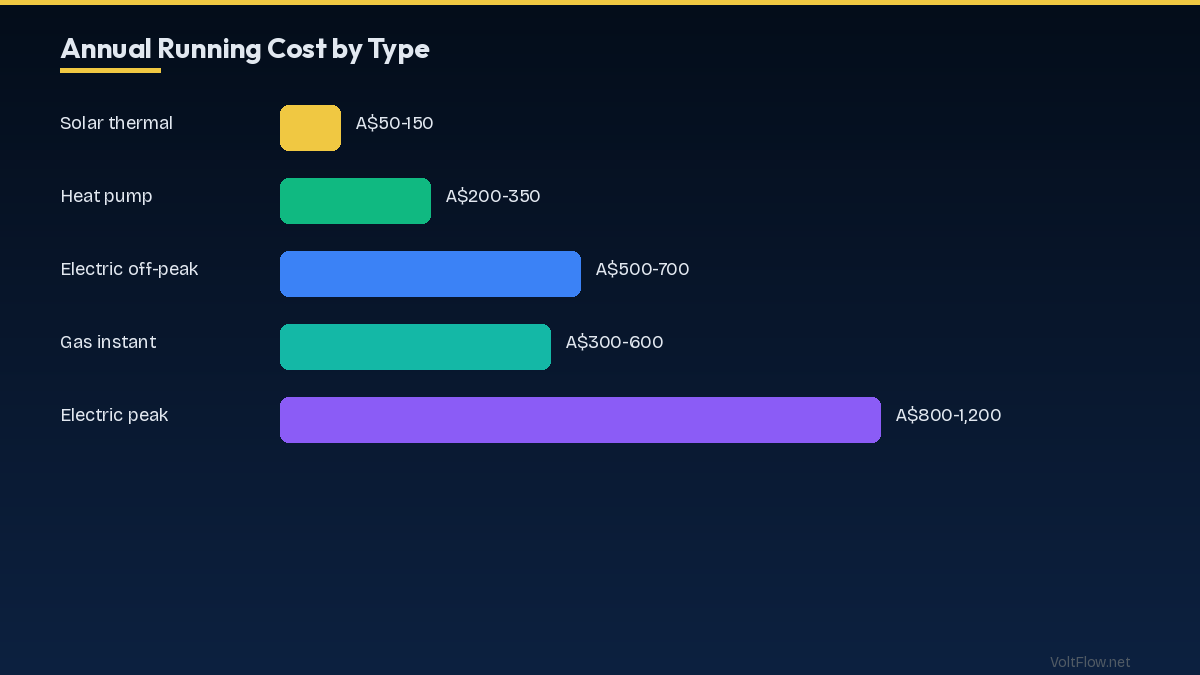
Running Cost by System Type
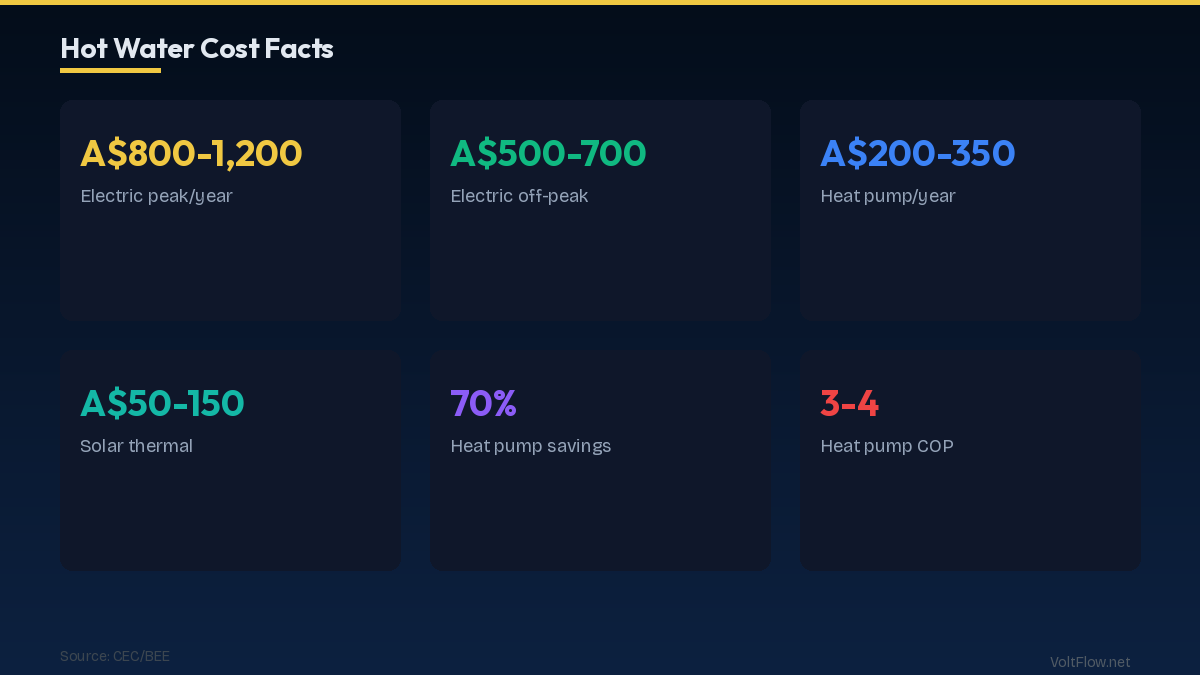
Electric storage (peak tariff): A$800-1,200/year. A standard 250-315L tank with a 3.6kW element uses 3,500-4,500 kWh/year. At 30c/kWh peak rate: A$1,050-1,350. This is the most expensive way to heat water in Australia. The element heats water to 60-65°C, then standby losses of 1-2 kWh/day maintain temperature. Electric storage (off-peak/controlled load): A$500-700/year. Same system but on a dedicated off-peak circuit at 16-20c/kWh. The tank heats overnight and stays warm during the day. Savings: A$300-500/year vs peak — with zero hardware changes. Ask your electrician about switching to controlled load (Tariff 31 or equivalent). Heat pump: A$200-350/year. Uses 800-1,200 kWh/year at 30c = A$240-360. With solar or off-peak: A$100-200. COP of 3-4 means it produces 3-4 kWh of heat per 1 kWh electricity. Solar thermal (ETC or FPC): A$50-150/year. Solar heats the water directly; electric backup only needed in extended cloudy periods and winter. Lowest running cost of all options.
Electric Storage: The Hidden Costs of Standby Losses
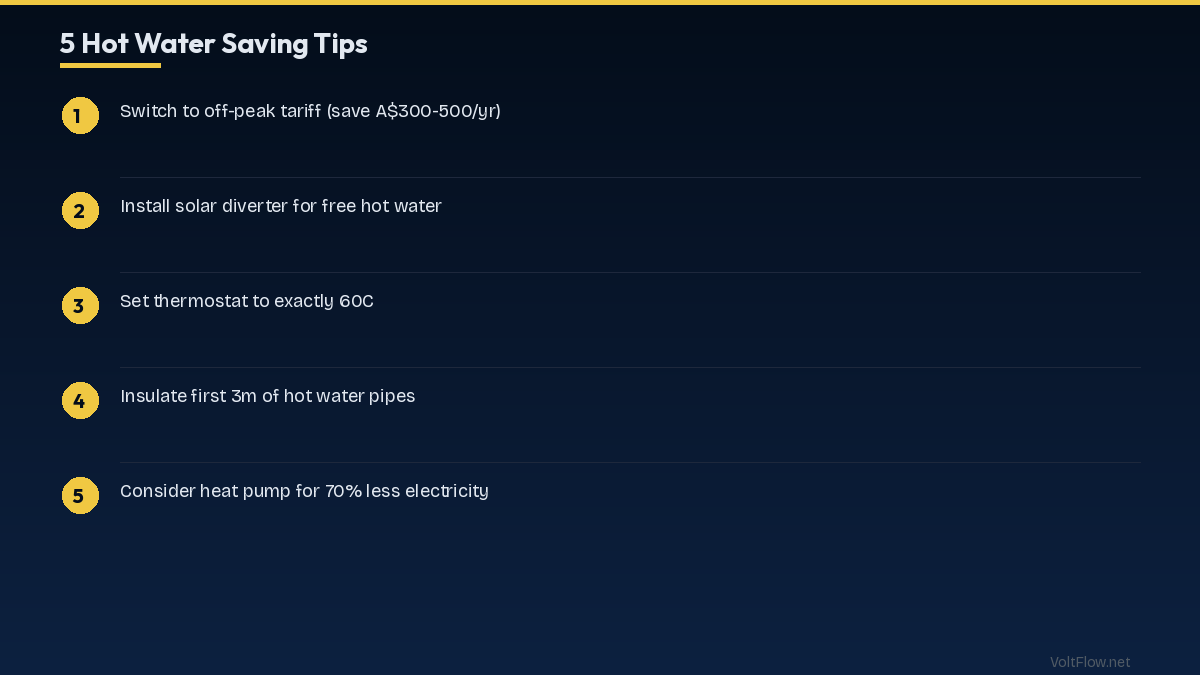
Your electric hot water tank loses 1-2 kWh/day through standing heat losses — even when nobody uses hot water. That's A$110-220/year wasted maintaining temperature. Older tanks with degraded insulation lose more. Tank insulation matters: Modern tanks use polyurethane foam (PUF) insulation with R-values of 16-22. Older tanks (10+ years) may have thinner insulation or glass wool, losing 30-50% more heat. A tank blanket (A$50-80) wrapped around an older tank reduces standing losses by 20-30%. Thermostat setting: The Australian/NZ standard requires storage at 60°C minimum to prevent Legionella bacteria growth. However, some tanks are factory-set to 65-70°C. Reducing to exactly 60°C (the minimum safe level) saves 8-12% on heating energy. Do not set below 60°C. Pipe insulation: Uninsulated hot water pipes between the tank and your bathroom/kitchen lose significant heat. Foam tube insulation (A$2-5/metre, DIY install) on the first 2-3 metres of pipe from the tank saves A$30-60/year. Location: Tanks installed outdoors or in garages lose more heat in winter. Indoor tanks in heated spaces are most efficient.
Heat Pump vs Electric: Detailed Cost Comparison
Over a 10-year lifespan, the total cost of ownership tells the real story. Standard electric (peak tariff, 10 years): Purchase A$1,200. Running A$1,000/year × 10 = A$10,000. Replacement element A$300 at year 7. Total: A$11,500. Standard electric (off-peak, 10 years): Purchase A$1,200. Running A$600/year × 10 = A$6,000. Total: A$7,200. Heat pump (10 years): Purchase A$3,500 (after STCs). Running A$280/year × 10 = A$2,800. Total: A$6,300. The heat pump wins on total cost of ownership even before state rebates. With Victoria's Solar Homes rebate potentially covering the full purchase, the savings are dramatic. Payback on heat pump vs electric peak: (A$3,500 - A$1,200) ÷ (A$1,000 - A$280) = 3.2 years. After 3.2 years, you're saving A$720/year for the remaining 7-8 years of the heat pump's life.
How to Switch to Off-Peak: Quick Win for A$300-500/Year
If you have an electric storage hot water system and you're currently on a general/peak tariff, switching to controlled load or off-peak is the single fastest way to cut your hot water costs. How it works: Your electrician installs a timer or connects your hot water circuit to a dedicated off-peak meter point. The distributor (DNSP) enables the controlled load tariff. Your tank heats overnight during off-peak hours (typically 10 PM-7 AM) and the stored hot water lasts through the day. Cost to switch: Electrician: A$150-400 for the circuit modification. No new tank needed. The savings (A$300-500/year) mean payback within the first year. Will I run out of hot water? A properly sized tank (250L for 3-4 people, 315L for 4-5) heated overnight has enough hot water for a full day. If you consistently run out, you may need a larger tank or a boost timer that provides a brief reheat during the afternoon. Availability: All Australian states offer controlled load tariffs. In VIC, it's automatic with smart meters — just ask your retailer. In NSW/QLD/SA, your electrician coordinates with the DNSP.
Solar Integration: Free Hot Water from Your Panels
If you have rooftop solar, a solar diverter can send excess solar energy directly to your hot water element instead of exporting it at 3-8c/kWh. How it works: Devices like Catch Power Green (A$800-1,000) or SolarEdge DERMS monitor your solar export in real-time. When surplus power is available, they divert it proportionally to your hot water element. You get free hot water using energy that would otherwise be exported for 5-8c. Savings: A typical 3.6kW element running 2-3 hours on solar surplus heats your tank for free on most sunny days. Annual savings: A$400-700 compared to peak electric. Combined with overnight off-peak backup for cloudy days, your annual hot water cost drops to A$100-200. Alternative: heat pump + solar scheduling. If you have a heat pump, run it during solar hours using a timer or the heat pump's built-in smart mode. The heat pump uses 800-1,200W (vs 3,600W for an element), so even modest solar surplus covers it. Annual cost with solar: A$50-100. Best strategy: Solar diverter for existing resistance tanks (cheapest upgrade). Heat pump + solar timer for new installations (lowest long-term cost). Solar thermal for new builds (zero electricity, highest upfront cost).
Frequently Asked Questions
How much does electric hot water cost per year in Australia?
Electric storage on peak tariff costs A$800-1,200/year. On off-peak/controlled load: A$500-700. Heat pump: A$200-350. Solar thermal: A$50-150.
Is it worth switching hot water to off-peak tariff?
Yes. Switching to off-peak costs A$150-400 (electrician) and saves A$300-500/year. Payback under 12 months. No new equipment needed.
How much does a heat pump hot water save vs electric?
A heat pump saves A$500-850/year compared to peak-rate electric storage. Total cost of ownership over 10 years is A$5,000 less than standard electric on peak tariff.
Can solar panels heat my hot water?
Yes. A solar diverter (A$800-1,000) sends excess solar to your existing hot water element. Saves A$400-700/year. Alternatively, time your heat pump to run during solar hours.
What temperature should I set my hot water to?
Australian standards require storage tanks at minimum 60°C to prevent Legionella. Do not set below 60°C. Setting above 65°C wastes energy — 60°C is the optimal balance of safety and efficiency.