EV Charging Cost UK 2026 — Home vs Public Pricing
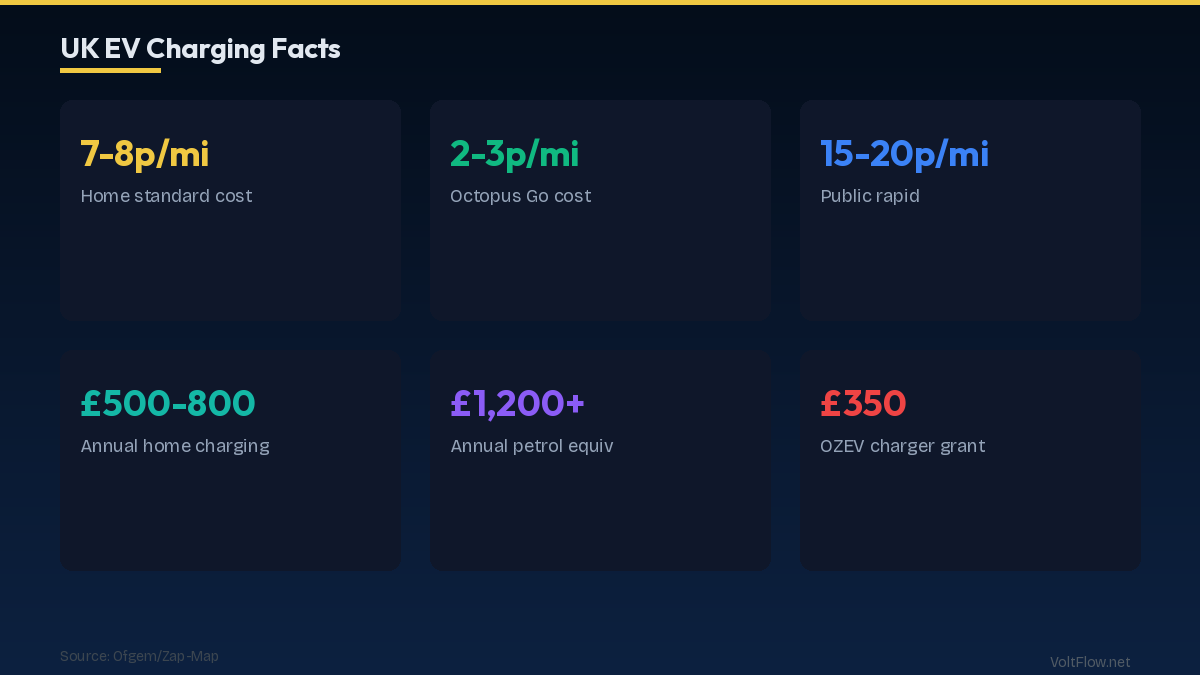
Charging an EV at home in the UK costs 7-8p per mile at standard rates, dropping to 2-3p/mile on Octopus Go. Public rapid charging costs 15-20p/mile. Annual fuel cost: £500-800 home vs £2,000+ petrol. Savings: £1,200-1,500/year.

Home Charging Costs: Standard vs Off-Peak
Standard rate (24.5p/kWh): A typical EV uses 3-4 miles per kWh. At 24.5p/kWh, that's 6-8p per mile. For 8,000 miles/year: £490-650/year. Compare to petrol at 15-18p/mile: £1,200-1,440/year. Saving: £700-800/year on standard rate alone. Octopus Go (7.5p/kWh, 12:30-4:30 AM): The UK's best EV tariff. At 7.5p: just 2-2.5p per mile. For 8,000 miles: £150-200/year. Saving vs petrol: £1,000-1,250/year. Requires a smart meter and compatible charger. Octopus Intelligent Go: Same 7.5p rate but the charging window flexes — Octopus remotely schedules your car's charging during the cheapest periods overnight. Works with select EVs (Tesla, VW ID, BMW i). The car is ready by your set departure time. Economy 7 (10-15p/kWh off-peak): If you're on Economy 7, overnight charging costs 3-5p/mile. Better than standard rate but not as cheap as Octopus Go. Solar charging: If you have solar panels, daytime charging is essentially free. A Zappi charger (£800-1,100) automatically uses solar surplus. Annual EV cost with solar: £50-150.
Public Charging Network and Costs
Slow/fast (7-22kW): 30-50p/kWh. Shopping centres, car parks, workplaces. Some are free (Tesco, Lidl partnerships with Pod Point). Charge time: 3-8 hours. Cost per charge (20-60 kWh): £6-30. Rapid (50kW): 60-79p/kWh. Service stations and dedicated charging hubs. 30-60 min for 10-80%. Networks: BP Pulse, Gridserve, InstaVolt, Tesla Supercharger. Cost per typical charge: £25-45. Ultra-rapid (100-350kW): 70-85p/kWh. Fastest available, 15-30 min for 10-80%. Ionity (£0.69/kWh with subscription), Tesla V4, Gridserve Electric Highway. Cost per charge: £30-50. Best value networks: Osprey (contactless, consistent pricing), InstaVolt (no subscription), Tesla Supercharger (cheapest for Tesla owners). BP Pulse subscription (£7.85/month) offers discounted rates. Free charging: Tesla destination chargers at hotels, Tesco Pod Point (free with shopping), some council car parks, and workplace chargers. Plan routes using Zap-Map or A Better Route Planner. Comparison to petrol: Even at rapid charging rates (70p/kWh = 18-23p/mile), an EV is comparable to a 50mpg petrol car at £1.35/litre. Home charging is 3-5x cheaper than petrol.
Home Charger Installation: Cost and Options
Untethered (Type 2 socket, 7kW): £700-1,000 installed. You plug in your own cable. More flexible if you change cars. Brands: Andersen A2, myenergi Zappi. Tethered (attached cable, 7kW): £600-900 installed. Convenient — just grab and plug in. Most popular choice. Brands: Ohme Home Pro (smart, Octopus-integrated), Pod Point Solo 3, Wallbox Pulsar Plus. Smart chargers (required for OZEV grant): All chargers installed with the OZEV grant must be smart — meaning they can schedule charging, respond to energy tariffs, and be remotely controlled. This is a legal requirement under the Electric Vehicles (Smart Charge Points) Regulations 2021. OZEV grant: The Office for Zero Emission Vehicles offers up to £350 off home charger installation for eligible households (tenants, flat-owners in some cases). Landlords can also claim. Check gov.uk/government/collections/government-grants-for-low-emission-vehicles for current eligibility. Installation requirements: Dedicated 32A circuit from your consumer unit. Most homes can accommodate this without an upgrade. If your consumer unit is full, expect an additional £200-400 for a small consumer unit upgrade. Installation takes 2-4 hours by an OZEV-approved installer.
EV Running Costs vs Petrol and Diesel
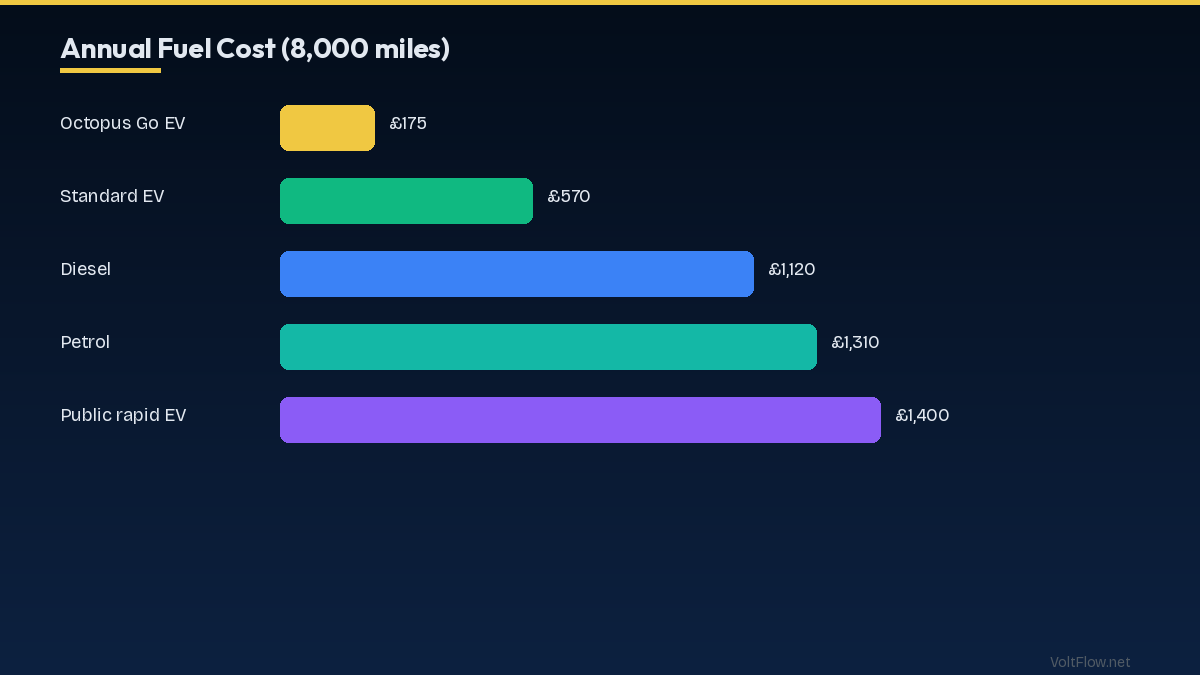
Annual cost comparison for 8,000 miles: EV home standard (24.5p/kWh): £570. EV Octopus Go (7.5p/kWh): £175. EV public rapid average: £1,150. Petrol (45mpg, £1.35/L): £1,310. Diesel (55mpg, £1.40/L): £1,120. Maintenance: EV annual service: £100-200 (tyre rotation, brake check, cabin filter). Petrol/diesel service: £300-600 (oil, filters, timing belt, exhaust, clutch wear). Saving: £200-400/year. Road tax (VED): EVs registered before April 2025 pay £0. EVs registered after April 2025 pay standard rate (£190/year from year 2). Still cheaper than most petrol cars in higher bands. Insurance: EV insurance is 10-20% higher due to repair costs and battery concerns. Typical annual premium: £500-800 vs £400-650 for equivalent petrol. Total annual running cost: EV (home charging): £1,300-1,700. Petrol equivalent: £2,400-3,200. Annual saving: £1,000-1,500. Over 10 years: £10,000-15,000. These savings offset the typically £3,000-8,000 higher purchase price of EVs.
Best EV Tariffs in the UK 2026
Octopus Go: 7.5p/kWh (12:30-4:30 AM), standard rate rest of day. Best for dedicated overnight EV charging. Requires smart meter. Octopus Intelligent Go: Same 7.5p rate but with smart scheduling — Octopus controls when your car charges during the off-peak window to optimize grid load. Works with compatible vehicles. Octopus Agile: Half-hourly wholesale pricing. Sometimes goes negative (you're paid to charge). Average rate often 15-20p. Best with automation (battery + solar + EV). Advanced users save the most. EDF GoElectric: Competitive off-peak EV rate. Check current pricing. British Gas Electric Drivers: Off-peak EV rate with smart charging features. Choosing the right tariff: If you only charge at home overnight: Octopus Go is unbeatable. If you have solar + battery: Octopus Agile maximizes value (export during high prices, charge during low). If you want simplicity: a competitive fixed tariff with home charging on a timer at night saves without complexity. Smart charger integration: Ohme chargers integrate directly with Octopus tariffs — automatically charging at the cheapest half-hourly slots. Zappi works with any tariff and adds solar surplus charging capability.
Frequently Asked Questions
How much does it cost to charge an EV at home in the UK?
At standard 24.5p/kWh: 6-8p per mile or £490-650/year for 8,000 miles. On Octopus Go (7.5p/kWh): 2-2.5p per mile or £150-200/year. Solar charging is near-free.
Is it cheaper to charge an EV or fill up with petrol?
EV home charging is 60-85% cheaper than petrol. Annual fuel: EV £175-650 vs petrol £1,310 for 8,000 miles. Even public rapid charging is comparable to or cheaper than petrol.
What is Octopus Go tariff?
Octopus Go offers electricity at 7.5p/kWh between 12:30-4:30 AM, specifically designed for overnight EV charging. Requires a smart meter. It is the cheapest EV charging tariff in the UK.
How much does a home EV charger cost in the UK?
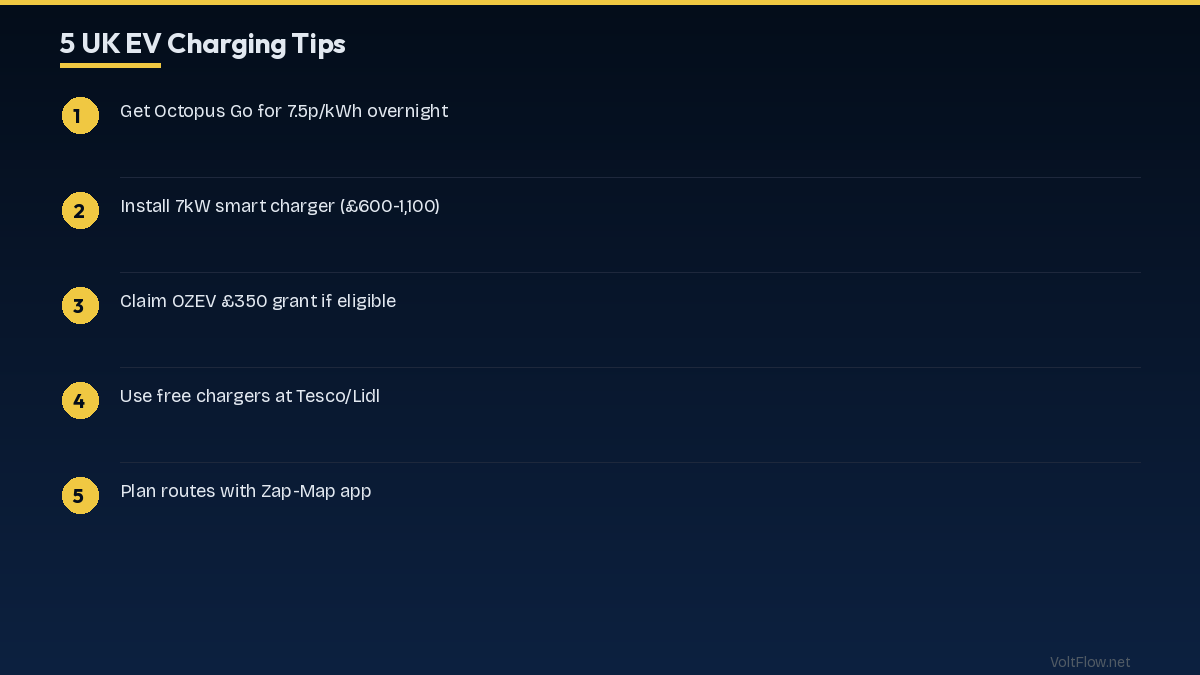
A 7kW smart charger costs £600-1,100 installed. The OZEV grant provides up to £350 off for eligible households. Installation takes 2-4 hours and requires a dedicated 32A circuit.
How much do I save per year with an EV in the UK?
Total annual running cost savings (fuel + maintenance) are £1,000-1,500 compared to an equivalent petrol car. Over 10 years, that is £10,000-15,000 in savings.