Domestic Electrical Regulations UK 2026 — Part P & BS 7671
UK domestic electrical work is governed by Part P of the Building Regulations and must comply with BS 7671 (18th Edition). Notifiable work requires certification by a competent person. EICRs are now mandatory for rental properties every 5 years.
Part P Building Regulations: What Is Notifiable Work?
Part P covers electrical installation work in dwellings in England and Wales (Scotland has separate Technical Standards, Part 4). Notifiable work (requires certification): Installing a new circuit (e.g., cooker, shower, EV charger). Replacing a consumer unit (fuse board). Any electrical work in a bathroom, kitchen within 3m of a sink, or outdoors. Adding a new socket or light in a kitchen or bathroom. Installing fixed outdoor electrical equipment (lights, EV charger, garden sockets). Non-notifiable work: Like-for-like replacement of accessories (sockets, switches, ceiling roses) outside special locations. Adding fused spurs to an existing circuit (outside bathrooms/kitchens). How certification works: A Competent Person (electrician registered with NICEIC, NAPIT, ELECSA, or Stroma) self-certifies their work and issues a Building Regulations Compliance Certificate. This is sent to your local building control automatically. For unregistered electricians, you must apply to building control (£200-400) for inspection before and after the work. Always use a registered electrician for notifiable work — it's cheaper, faster, and ensures legal compliance.
BS 7671 18th Edition: Key Requirements
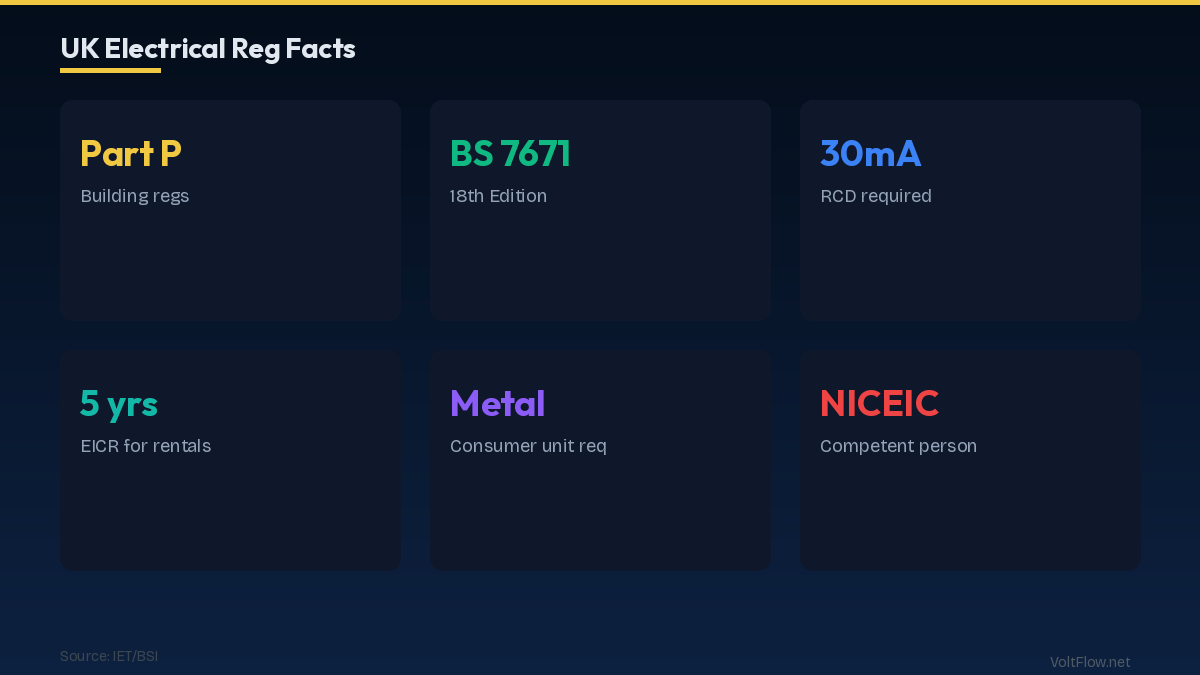
BS 7671 (the IET Wiring Regulations) is the technical standard for all electrical installations in the UK. The 18th Edition (with Amendment 2) is current in 2026. Key domestic requirements: RCD protection on all circuits — every circuit must have 30mA RCD or RCBO protection. No unprotected circuits allowed. Metal consumer units: Mandatory since 2016 (Amendment 3 of 17th Edition) for fire safety. Plastic consumer units are no longer compliant for new installations. Surge Protection Devices (SPDs): Required at the origin of installation where the consequences of an overvoltage event could result in serious injury, significant financial loss, or damage to irreplaceable items. In practice, SPDs are recommended for all new consumer units. Arc Fault Detection Devices (AFDDs): Recommended (not yet mandatory) for circuits in bedrooms, escape routes, and areas with sleeping risk. AFDDs detect series and parallel arc faults that standard MCBs and RCDs cannot. Expected to become mandatory in future BS 7671 editions. Maximum disconnection times: 0.4 seconds for socket circuits (TN systems). 5 seconds for fixed equipment circuits. These ensure rapid disconnection in fault conditions to prevent electrocution.
EICR: Electrical Installation Condition Report
An EICR (Electrical Installation Condition Report) is a comprehensive inspection and test of your home's electrical installation. When is it required? Rental properties: Every 5 years or at change of tenancy (Electrical Safety Standards in the Private Rented Sector Regulations 2020). Before selling a home: not legally required but increasingly requested by buyers and mortgage lenders. After any significant electrical work or suspected electrical issue. Consumer unit replacement: EICR of existing circuits is recommended. What it includes: Visual inspection of all accessible electrical equipment. Testing of circuits (insulation resistance, earth fault loop impedance, RCD operation, polarity). Classification of findings: C1 (danger present — immediate action required), C2 (potentially dangerous — urgent remediation), C3 (improvement recommended — not mandatory), FI (further investigation required). Cost: £150-300 for a typical 3-bedroom home. Takes 2-4 hours depending on the number of circuits. If problems are found: C1 and C2 issues must be fixed within 28 days (rental properties) or as soon as reasonably practicable (owner-occupied). Your electrician provides a quote for remedial work.
Consumer Unit Regulations and Upgrades
The consumer unit (fuse board) is the heart of your home's electrical system. Current requirements for new/replacement consumer units: Must be metal (non-combustible) enclosure. All circuits must have RCD protection (either dual-RCD split board or individual RCBOs). Main switch rated at 100A (typical). SPD fitted at origin. When to upgrade: Your existing board has rewireable fuses (wire elements instead of MCBs). It's a plastic consumer unit (fire risk). No RCD protection on circuits. You're adding a new circuit (EV charger, cooker, shower). An EICR identifies C1/C2 issues with the existing board. Cost: Consumer unit replacement: £400-800 depending on the number of ways and whether RCBOs are used. With EICR and remedial work: £600-1,200. RCBO boards vs split-load: A split-load board has two RCDs, each protecting half the circuits. If one RCD trips, you lose half your circuits. An RCBO board has individual RCD/MCB protection per circuit — if one trips, only that circuit is affected. RCBO boards cost £100-200 more but offer superior protection and convenience.
DIY Electrical Work: What You Can and Cannot Do
You CAN do (non-notifiable, outside special locations): Replace like-for-like sockets, switches, and ceiling roses (existing circuit, not in bathroom/kitchen). Add fused spurs from ring circuits. Replace a damaged flex on an appliance. Install low-voltage (12V) lighting systems. Change light fittings (if the existing circuit is safe). You CANNOT do without Part P certification: ANY work in a bathroom (even changing a light fitting). Adding new circuits or extending existing ones in a kitchen. Consumer unit (fuse board) work. Outdoor electrical work. EV charger installation. New circuit installation anywhere. Safety tips for permitted DIY work: Always isolate the circuit at the consumer unit before starting. Use a voltage tester to confirm the circuit is dead. Follow manufacturer instructions for new accessories. Never work on live circuits. If in doubt, call a registered electrician. Penalties for non-compliance: Unauthorized notifiable work can result in enforcement notices, fines, and difficulty selling your property. Insurance may not cover damage from non-compliant electrical work. Always get proper certification.

Frequently Asked Questions
Common question about Domestic Electrical Regulations UK 2026?
See the detailed section on Part P Building Regulations: What Is Notifiable Work? above for comprehensive information.
Common question about Domestic Electrical Regulations UK 2026?
See the detailed section on BS 7671 18th Edition: Key Requirements above for comprehensive information.
Common question about Domestic Electrical Regulations UK 2026?
See the detailed section on EICR: Electrical Installation Condition Report above for comprehensive information.
Common question about Domestic Electrical Regulations UK 2026?
See the detailed section on Consumer Unit Regulations and Upgrades above for comprehensive information.
Common question about Domestic Electrical Regulations UK 2026?
See the detailed section on DIY Electrical Work: What You Can and Cannot Do above for comprehensive information.