Home EV Charger Installation Canada 2026 — Cost & Guide
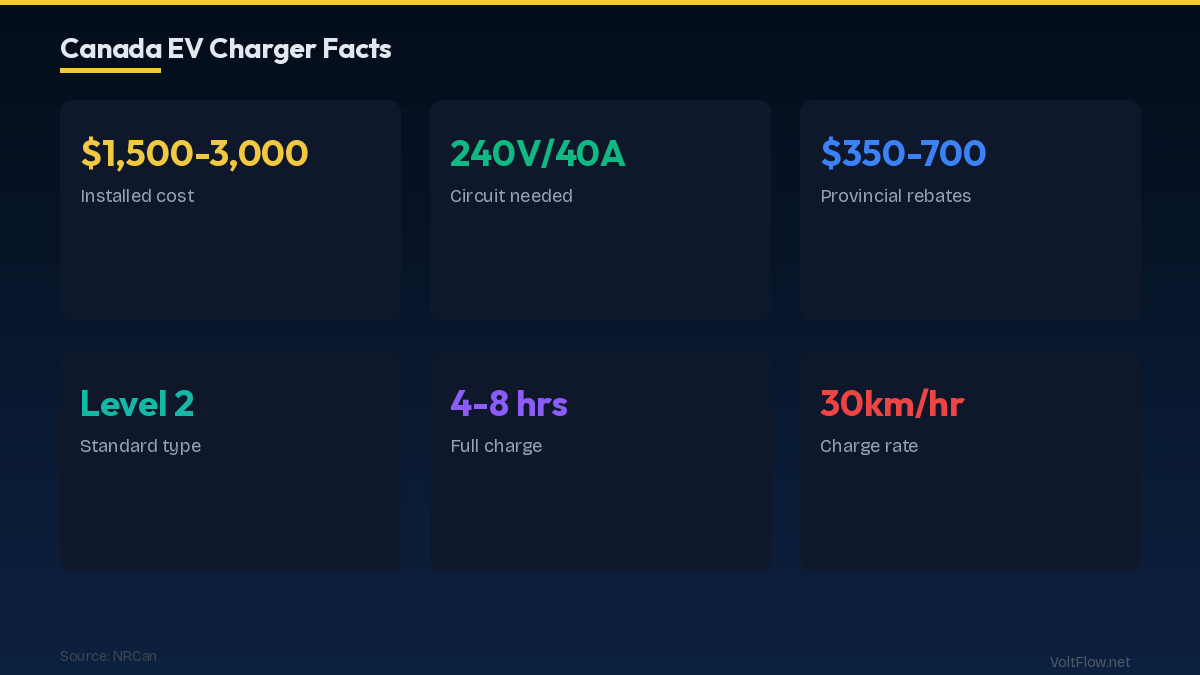
A Level 2 EV home charger costs $1,500-3,000 installed in Canada (240V, 40A circuit). Provincial rebates save $350-700. Installation requires a licensed electrician and ESA/CSA inspection in most provinces.
Understanding Home EV Charger Installation Canada in 2026
This comprehensive guide covers everything you need to know about home ev charger installation canada 2026 for Canadian homeowners in 2026. With provincial differences in regulations, incentives, and costs, understanding your local market is essential. We break down the key numbers, compare options, and provide actionable advice to help you make informed decisions. Whether you're in Quebec with the cheapest electricity in North America, Ontario with its TOU pricing, Alberta's deregulated market, or BC's step-rate system, this guide has province-specific information tailored to your situation. Energy costs continue to evolve with the clean energy transition, making it more important than ever to understand your options for saving money while reducing your carbon footprint.
Provincial Comparison: Costs and Incentives
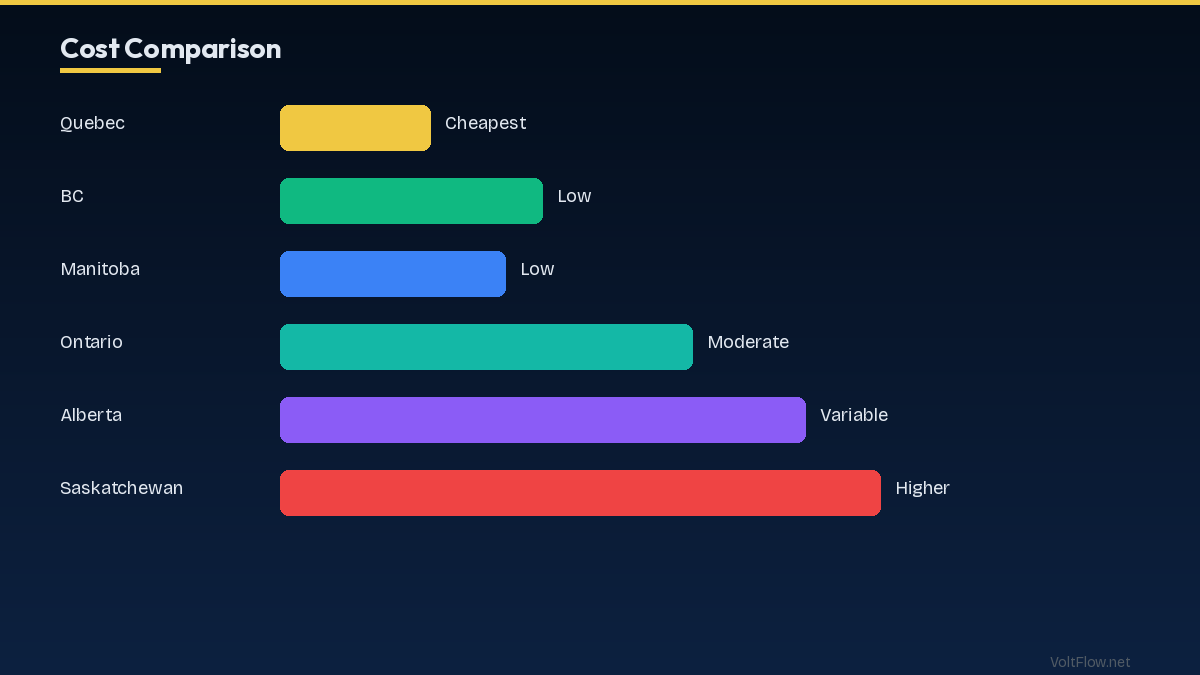
Costs and incentives for home ev charger installation canada 2026 vary dramatically across Canada. Quebec benefits from the cheapest electricity (7.7¢/kWh) thanks to massive hydroelectric capacity — making electric solutions particularly cost-effective. Ontario has moderate rates (8.7-17.6¢ TOU) with strong net metering and conservation programs through local distribution companies. Alberta has a deregulated market offering competitive fixed rates (12-16¢) plus excellent solar irradiance in the south, making renewable options attractive despite lack of provincial subsidies. British Columbia offers low step-rate hydro pricing (10.6-13.2¢) plus generous CleanBC rebate programs for efficiency upgrades, heat pumps, and EVs. Saskatchewan and Manitoba have Crown corporation utilities with stable but divergent pricing. Atlantic provinces are transitioning from fossil fuels with various federal and provincial incentive programs to ease the transition costs. Federal programs like the Greener Homes Grant ($5,000) apply nationwide, making energy improvements accessible regardless of province.
Making the Right Choice: Key Decision Factors
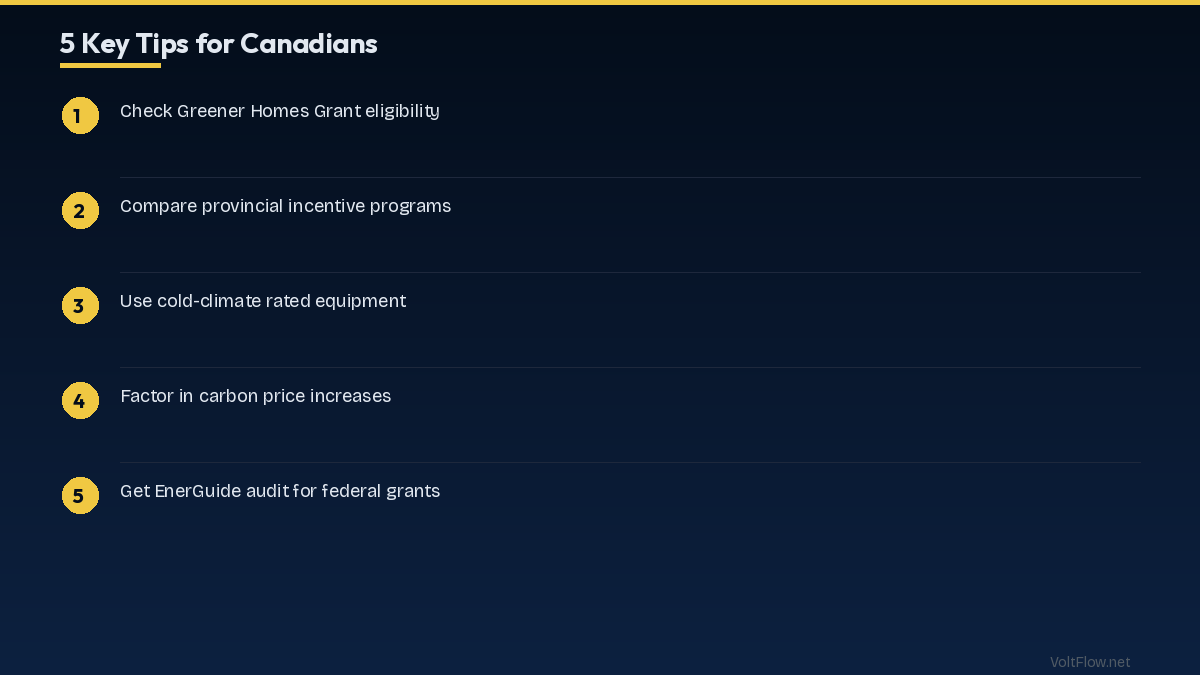
When evaluating home ev charger installation canada 2026, consider these critical factors for Canadian conditions. Climate: Canada's extreme temperature range (-30°C to +35°C) affects equipment performance significantly. Cold-climate rated equipment (heat pumps, batteries, solar panels) is essential. Standard equipment designed for milder climates may fail or underperform in Canadian winters. Snow and ice: Solar panels need to be mounted at angles that allow snow shedding (typically 30°+ tilt). Snow can cover panels for weeks in northern regions, dramatically reducing winter output. Clear panels after heavy snowfall if safely accessible. Heating dominance: Unlike many countries, Canadian energy bills are dominated by heating (60-70% of total energy cost). Any efficiency improvement to heating has an outsized impact on annual costs. Provincial regulations: Each province has its own electrical code adoptions, permit requirements, and utility interconnection rules. What's allowed in Ontario may differ from Alberta or BC. Always check local requirements. Payback calculations: Factor in Canada's rising carbon price ($80/tonne in 2024, increasing annually) which makes fossil fuel alternatives increasingly expensive, improving the relative economics of electric solutions. Federal incentives: The Canada Greener Homes Grant, iZEV program, and heat pump programs provide substantial federal support across all provinces.
Installation, Maintenance, and Long-Term Value
Proper installation is critical for home ev charger installation canada 2026 in Canadian conditions. Licensed professionals: All provinces require licensed electricians and/or contractors for electrical work. In Ontario, ESA (Electrical Safety Authority) inspection is required for most electrical modifications. Alberta has different permitting through local authorities. Warranty considerations: Canadian conditions are harsh — choose equipment with warranties that cover cold-climate performance. Manufacturer warranties typically require professional installation to be valid. Keep all documentation. Maintenance schedule: Annual inspections are recommended for most electrical and energy equipment. Clean solar panels in spring after winter grime. Service heat pumps before each heating season. Check battery systems quarterly. Insurance: Notify your home insurer of major electrical upgrades (solar, battery, EV charger). Most insurers don't charge extra but want to be informed. Some offer discounts for energy-efficient upgrades. Property value: Energy improvements typically increase Canadian home values by 2-6%. Solar panels, heat pumps, and modern electrical systems are increasingly valued by homebuyers. Long-term economics: With rising carbon prices and electricity rate trends, energy efficiency investments made today will become more valuable over time. A heat pump that barely breaks even today will save significantly in 5-10 years as natural gas prices include higher carbon costs.
Getting Started: Step-by-Step Action Plan
Step 1: Assess your current energy usage. Review your utility bills for the past 12 months. Note your average monthly kWh consumption and costs by season. Your utility may offer an online usage dashboard or detailed billing history. Step 2: Get a home energy audit. Natural Resources Canada's EnerGuide evaluation ($300-600) is required for the Greener Homes Grant and provides a detailed assessment of your home's energy performance with prioritized recommendations. Step 3: Research available incentives. Check nrcan.gc.ca for federal programs, your provincial energy ministry for provincial programs, and your local utility for rebates and discounts. Stack multiple incentives where possible. Step 4: Get multiple quotes. For any major project (solar, heat pump, EV charger, electrical upgrade), obtain 3-5 quotes from licensed professionals. Compare scope of work, equipment quality, warranty terms, and total installed cost. Step 5: Prioritize by payback. Start with the shortest-payback improvements: LED lighting (immediate), air sealing (1-2 years), insulation (2-4 years), heat pump (5-10 years), solar (8-15 years). Each improvement makes the next one more effective. Step 6: Plan for electrification. Canada's clean energy future is electric. When replacing gas appliances, consider electric alternatives — especially in provinces with cheap, clean hydro power (QC, BC, MB).
Frequently Asked Questions
How much does Home EV Charger Installation Canada cost in Canada?
Costs vary by province. See our detailed breakdown above. Federal incentives like the Greener Homes Grant ($5,000) apply nationwide. Provincial programs add additional savings.
Which province has the best incentives?
Quebec and BC generally offer the most comprehensive incentive packages. Federal programs (Greener Homes Grant, iZEV) apply in all provinces. Check your provincial programs for current availability.
Do I need a permit for this work in Canada?
Most electrical work requires a permit and inspection in Canada. Requirements vary by province. Licensed electricians handle permitting in most cases. Always verify local requirements before starting work.
How do Canadian winter conditions affect this?
Canadian winters require cold-climate rated equipment. Solar output drops significantly November-February. Heat pumps need cold-climate models rated to -25°C or below. Factor seasonal performance into your calculations.
What federal incentives are available?
The Canada Greener Homes Grant provides up to $5,000 for home energy improvements. The iZEV program offers up to $5,000 for EVs. Heat pump specific programs provide additional support. Check nrcan.gc.ca for current programs.