Electricity Rates Canada 2026 — Province-by-Province Price Guide
Canadian electricity rates range from 7.7¢/kWh in Quebec to 17-20¢/kWh in Alberta and Ontario peak. Hydro-rich provinces enjoy the cheapest power in the developed world. Here's every province's 2026 rates with saving strategies.
Provincial Rates Overview: Cheapest to Most Expensive
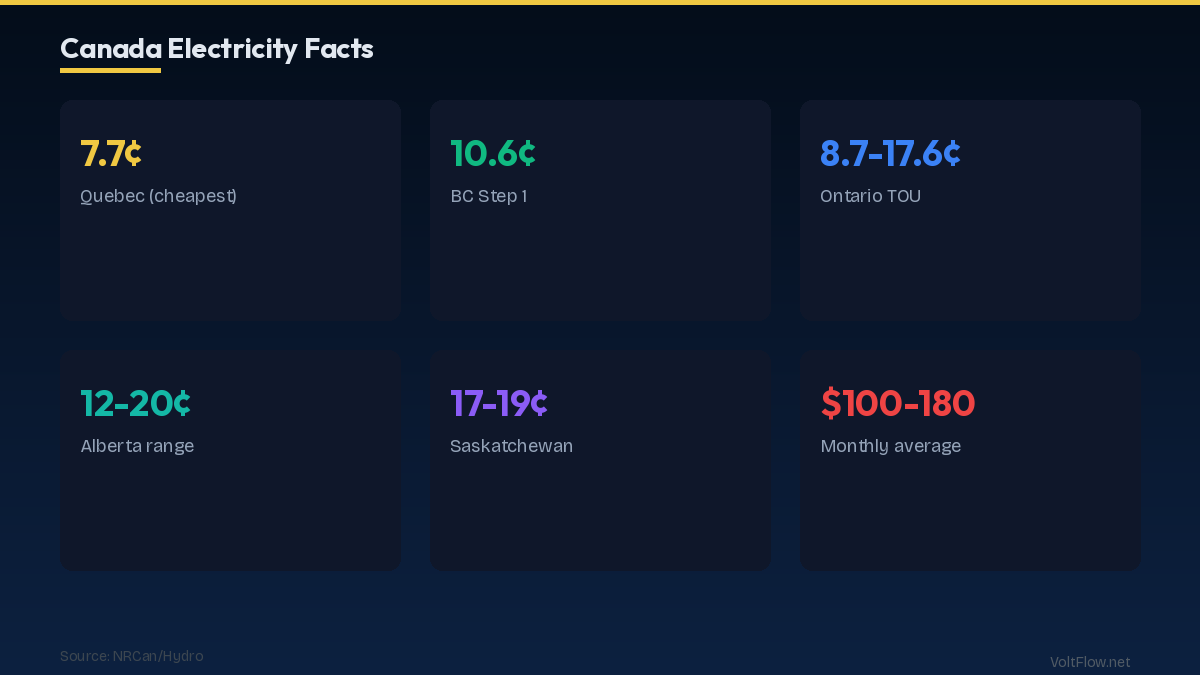
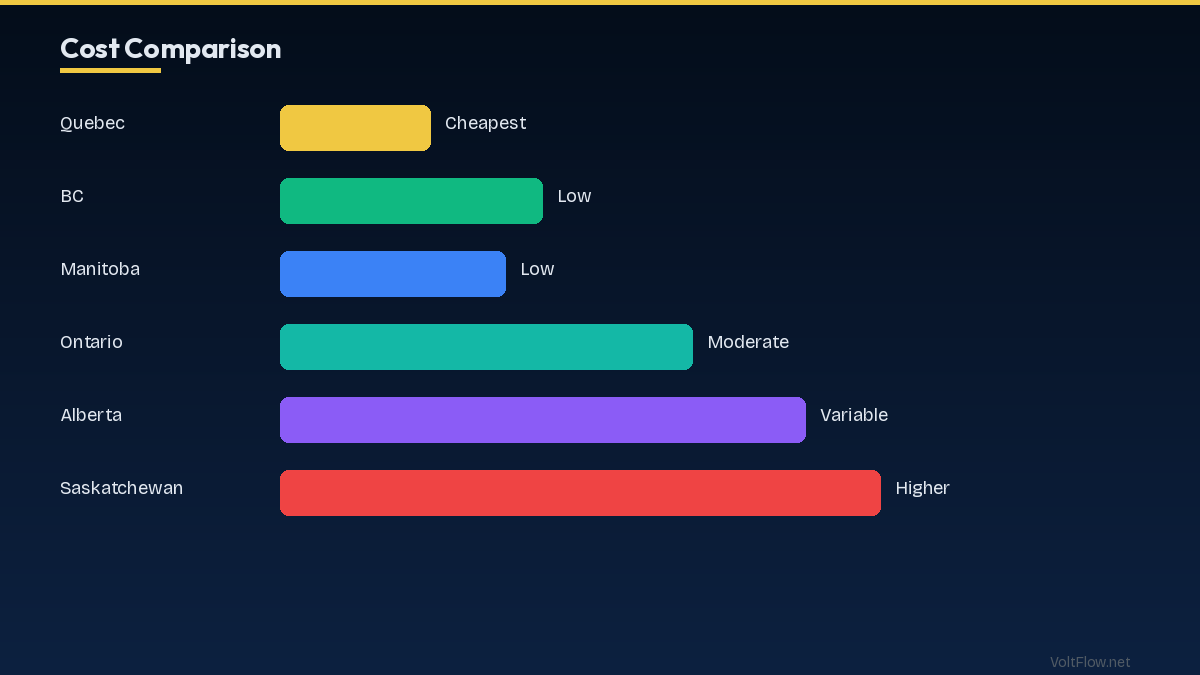
Quebec: 7.7¢/kWh — the cheapest electricity in North America. Hydro-Québec's vast hydroelectric system produces clean power at rock-bottom prices. First 40 kWh/day at 7.7¢, excess at 10.5¢. Average household bill: $100-130/month. British Columbia: 10.6¢ (Step 1), 13.2¢ (Step 2) — BC Hydro's two-step rate means the first ~1,350 kWh/2-month billing period costs less. Average: $100-140/month. Manitoba: 9.9¢/kWh — Manitoba Hydro benefits from Churchill River hydroelectric. Among the cheapest nationally. Ontario: 13-17¢/kWh (TOU) — Ontario's Time-of-Use has three tiers: off-peak 8.7¢ (7 PM-7 AM), mid-peak 12.2¢, on-peak 17.6¢. The Ontario Electricity Rebate reduces bills by ~11.7%. Average: $130-180/month. Alberta: 12-20¢/kWh — deregulated market with variable rates tied to the wholesale pool price. Fixed-rate contracts available at 12-16¢. Volatile — can spike during cold snaps. Average: $120-200/month. Saskatchewan: 17-19¢/kWh — SaskPower rates are among the highest due to natural gas and coal generation. Nova Scotia: 16-18¢/kWh — NS Power rates reflect aging infrastructure and coal/gas dependence. PEI, New Brunswick, Newfoundland: 13-17¢/kWh varying by utility and rate class.
Time-of-Use Rates: Ontario and Beyond
Ontario TOU (mandatory for most residential customers): Off-peak (7 PM-7 AM weekdays, all weekends/holidays): 8.7¢/kWh. Mid-peak (11 AM-5 PM weekdays): 12.2¢/kWh. On-peak (7-11 AM, 5-7 PM weekdays): 17.6¢/kWh. With the Ontario Electricity Rebate (~11.7% discount), effective rates are lower. Saving strategy: Shift EV charging, laundry, dishwasher to off-peak. On-peak vs off-peak spread is 9¢/kWh — shifting 30% of 8,000 kWh saves $215/year. Tiered rates (Ontario alternative): You can opt for tiered pricing — 8.3¢ for first 600/1,000 kWh (summer/winter), 9.7¢ for excess. Simpler but less savings potential than TOU. Best for households that can't shift usage. Other provinces with TOU: Nova Scotia offers TOU pilot programs. Alberta's real-time pricing (through retailers like ENMAX) offers dynamic rates. BC Hydro has studied TOU but hasn't implemented it widely yet. Smart thermostats: Ontario's PeakSaver Plus and similar programs provide free/discounted smart thermostats that reduce peak demand.
Delivery Charges, Global Adjustment, and Hidden Costs
Your electricity bill isn't just the commodity rate. Ontario example breakdown: Electricity commodity: 40-45% of bill. Delivery (transmission + distribution): 25-30%. Regulatory charges: 2-3%. Global Adjustment (GA): 15-25%. Debt Retirement Charge: now retired. Ontario Electricity Rebate: -11.7% credit. The Global Adjustment covers the cost of building new generation, conservation programs, and above-market contracts — it can double the effective cost per kWh. Alberta: Your bill includes: Energy charges (variable or fixed rate), Distribution charges (wire owner), Transmission charges, Rate riders, Local access fee, and Administration fee. Total all-in cost in Alberta is typically 15-25¢/kWh including all charges. BC: BC Hydro's rate is relatively simple — Step 1 and Step 2 rates include most delivery costs. An additional 5% GST applies. Basic charge: ~$0.20/day. Quebec: Hydro-Québec's rates are the most straightforward — two tiers with delivery bundled in. Access charge: $0.41/day. Total monthly cost for average household: $100-130 including all charges — the lowest in Canada.
How to Save on Electricity Across Canada
Ontario: Switch to TOU and shift usage to off-peak (save $150-300/year). Enroll in conservation programs (free smart thermostat through your LDC). Install solar — Ontario net metering credits at retail rate. Alberta: Lock in a fixed-rate contract when wholesale prices are low (typically spring/fall). Compare retailers on ucahelps.alberta.ca. Consider solar + net metering — Alberta's excellent solar irradiance (4.5-5.0 kWh/kWp/day in southern AB) makes payback competitive. British Columbia: Stay within Step 1 threshold (10.6¢) by conserving energy. BC Hydro rebates: $350 for high-efficiency EV charger, up to $3,000 for heat pump, and free energy coaching. CleanBC programs fund insulation, windows, and efficiency upgrades. Quebec: Rates are already very low, but switching from oil/gas heating to electric heat pumps leverages cheap hydro power. Hydro-Québec offers rebates for dual-energy systems (heat pump + electric backup), smart thermostats, and insulation. All provinces: LED lighting saves $50-100/year per household. Sealing air leaks reduces heating costs 15-25%. Energy Star appliances use 10-50% less energy. Many provincial utilities offer free home energy audits.
Electricity Cost Forecast: What to Expect 2026-2030
Ontario: Rates expected to increase 3-5% annually as nuclear refurbishment costs are recovered through the Global Adjustment. The Pickering and Darlington refurbishments add billions to ratepayer costs. Alberta: Volatile — tied to natural gas prices and renewable integration. The shift to renewables (solar and wind now cheapest new generation) should moderate long-term costs, but transmission upgrades add costs. BC: BC Hydro applying for moderate annual increases (2-4%) to fund infrastructure, including Site C dam completion. Rates remain among Canada's lowest. Quebec: Hydro-Québec rates increasing 3-4% annually. Still the cheapest in North America by far. The province's massive hydro capacity provides a long-term price advantage. Atlantic provinces: Transitioning from coal/gas to renewables. Short-term cost increases for infrastructure, but long-term savings as fuel costs are eliminated. EV and heat pump impact: Electrification of transport and heating will increase demand but also improve grid utilization (more overnight/shoulder usage). Utilities that manage this well will keep rates stable. Provinces with cheap, clean electricity (QC, BC, MB) are best positioned for the electrification transition.
Frequently Asked Questions
Which Canadian province has the cheapest electricity?
Quebec at 7.7¢/kWh — the cheapest in North America. Manitoba (9.9¢) and BC (10.6¢ Step 1) are also very affordable. All three benefit from hydroelectric generation.
How much is electricity in Ontario in 2026?
Ontario TOU rates: off-peak 8.7¢, mid-peak 12.2¢, on-peak 17.6¢/kWh. The Ontario Electricity Rebate reduces total bills by approximately 11.7%. Average monthly bill: $130-180.
Why is Alberta electricity so expensive?
Alberta has a deregulated market with prices tied to wholesale gas-fired generation. Rates are volatile, ranging from 12-20¢/kWh. Fixed-rate contracts can provide stability at 12-16¢.
How can I reduce my electricity bill in Canada?
Shift usage to off-peak on TOU tariffs, install LED lighting, seal air leaks, take advantage of provincial rebate programs, and consider solar + net metering. Savings of $200-600/year are typical.
Does Canada have time-of-use electricity pricing?
Ontario has mandatory TOU for most residential customers. Other provinces have pilot programs or real-time pricing options through specific retailers.