Electricity Cost NSW 2026 — Rates, Plans & Saving Tips
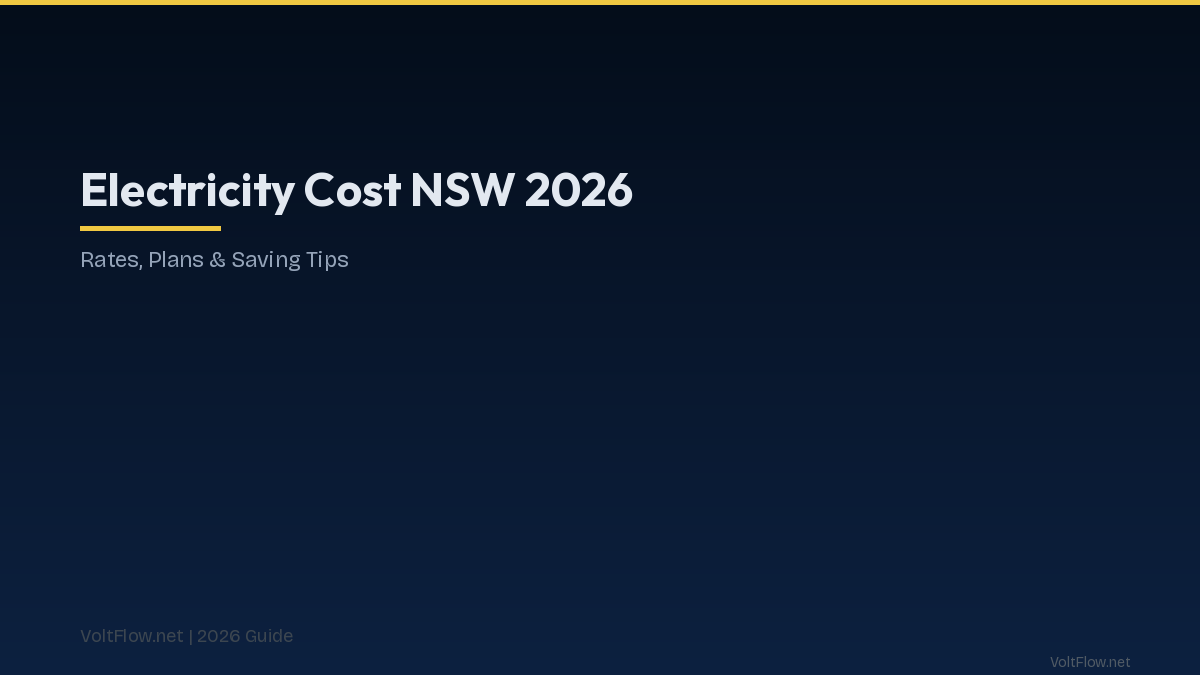
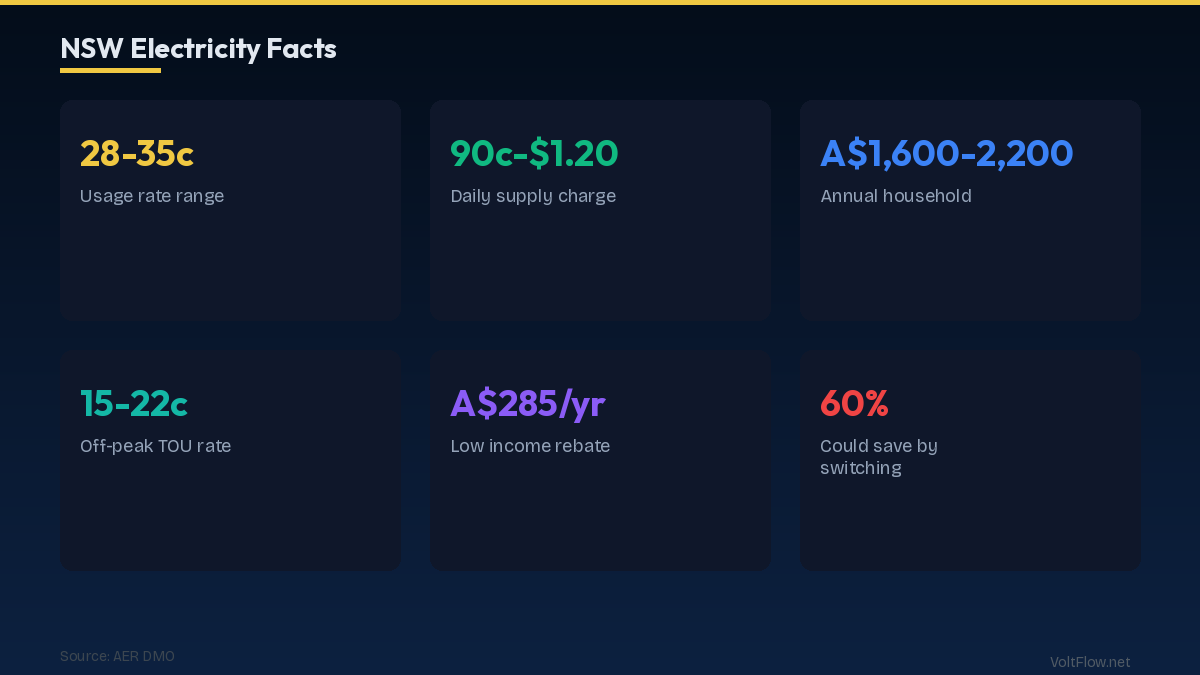
NSW electricity costs 28-35c/kWh with daily supply charges of 90c-A$1.20 in 2026. Average household bill: A$1,600-2,200/year. TOU off-peak as low as 15c/kWh. The AER estimates 60% of NSW households could save A$200-500/year by switching plans.
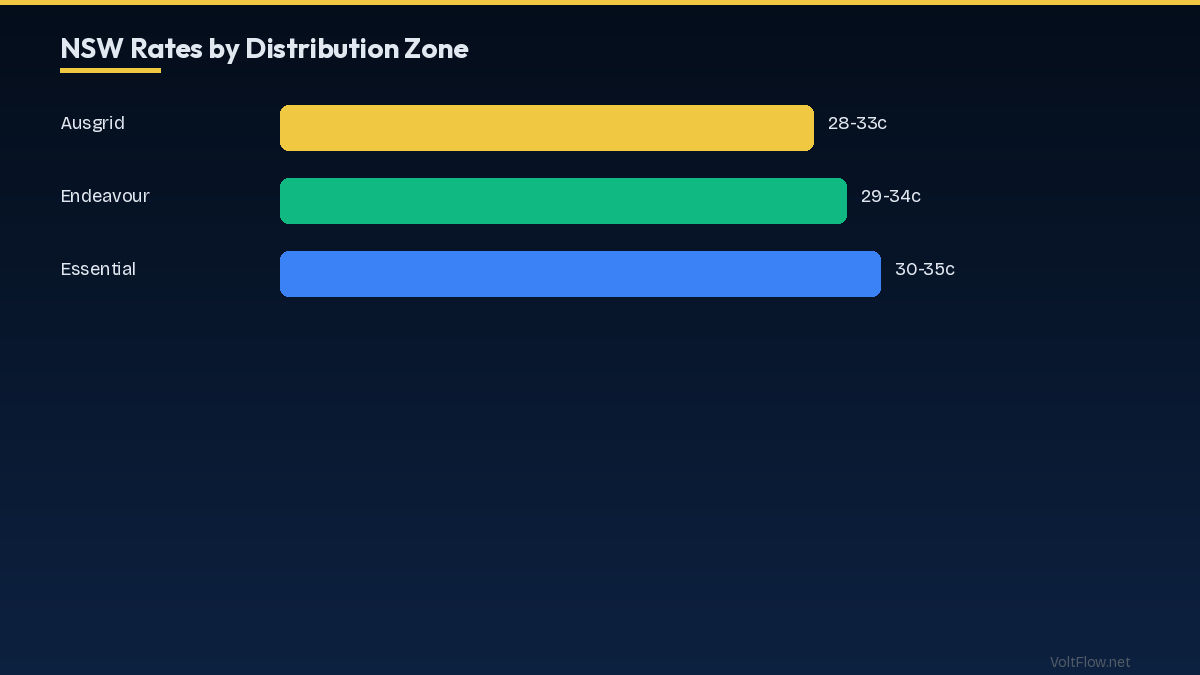
NSW Electricity Rates by Distribution Zone
NSW has three electricity distribution zones, each with different network charges that affect your final rate. Ausgrid (Sydney, Central Coast, Hunter): Usage 28-33c/kWh, supply 95c-A$1.10/day. The most competitive zone with highest retailer competition. TOU off-peak: 15-20c/kWh (10 PM-7 AM). Endeavour (Western Sydney, Illawarra, South Coast): Usage 29-34c/kWh, supply 90c-A$1.05/day. Slightly lower network charges. Similar TOU structure to Ausgrid. Essential (regional NSW): Usage 30-35c/kWh, supply A$1.00-1.20/day. Higher network charges due to longer transmission distances. Regional customers can still save by comparing market offers vs DMO. The Default Market Offer (DMO) for 2025-26 sets the maximum price retailers can charge on standing offers. Market offers typically undercut DMO by 15-25%. Always check if your plan beats the DMO — if not, you're overpaying.
Best Electricity Plans in NSW 2026
NSW has a competitive retail market with 20+ active retailers. Best value plans (as of early 2026): Check Energy Made Easy for current pricing — retailer offers change quarterly. Types of plans: Flat rate (same price 24/7, simplest) — good if your usage is evenly distributed. TOU (Time-of-Use, peak/shoulder/off-peak) — saves 20-40% if you can shift usage to off-peak. Demand tariff (charges based on peak demand) — can save or cost more depending on your pattern; avoid if you run multiple high-wattage appliances simultaneously. Solar-friendly plans: If you have solar panels, look for plans with higher feed-in tariffs (6-8c/kWh) AND competitive usage rates. Don't choose a plan solely for FiT — a plan with 8c FiT but 35c usage costs more than 5c FiT with 28c usage for most households. Tips for finding the best deal: Go to energymadeeasy.gov.au, enter your NMI (National Meter Identifier, on your bill), and the site will compare all available plans using your actual usage data. Review annually — the cheapest plan this year may not be cheapest next year.
Time-of-Use Tariffs: Save 20-40% on Your Bill
TOU tariffs in NSW typically have three pricing tiers: Peak (3-9 PM weekdays): 38-50c/kWh — this is when the grid is under most stress. Avoid running heavy appliances during this window. Shoulder (7 AM-3 PM, 9 PM-10 PM weekdays; 7 AM-10 PM weekends): 25-32c/kWh — moderate pricing, good for daytime solar self-consumption. Off-peak (10 PM-7 AM daily): 15-22c/kWh — cheapest rates, ideal for EV charging, hot water, dishwashers, and washing machines. Savings calculation: If you shift 40% of your 5,000 kWh/year consumption from peak to off-peak, you save approximately: 2,000 kWh × (45c - 18c) = A$540/year. How to shift usage: Timer on hot water system for off-peak heating. Dishwasher and washing machine delay-start for 10 PM. EV scheduled charging at 10 PM. Pre-cool house during shoulder hours, coast through peak. Smart plugs to schedule appliances automatically.
Solar and Battery Economics in NSW
A 6.6kW solar system in NSW generates approximately 24-28 kWh/day (annual average), saving A$1,400-2,000/year at 30c/kWh self-consumption rates. System cost after STC rebate: A$4,500-7,000. Payback: 3-4 years. NSW feed-in tariffs (5-8c/kWh) make self-consumption essential — every kWh used saves 28-35c vs 5-8c earned from export. Adding a 10kWh battery (A$10,000-13,000) stores daytime solar for evening use, saving an additional A$700-1,000/year. Battery payback in NSW: 8-11 years standalone. With VPP programs: 6-9 years. The optimal NSW setup: 6.6kW solar + TOU tariff + smart scheduling (run heavy loads during solar hours 10 AM-2 PM). This combination can reduce a A$2,000/year bill to A$400-800/year without a battery. Add a battery for the remaining gap if your budget allows.
Energy Concessions and Rebates in NSW
NSW offers several energy assistance programs: Low Income Household Rebate: A$285/year discount on electricity bills for eligible Health Care Card and Pension Concession Card holders. Applied automatically through your retailer. Family Energy Rebate: A$180/year for families with dependent children receiving Family Tax Benefit. Gas Rebate: A$120/year if you also use gas. Medical Energy Rebate: A$285/year for households with approved medical equipment (oxygen concentrators, dialysis machines, etc). Life Support Rebate: Additional support for life-sustaining equipment. Payment difficulty: All NSW retailers must offer hardship programs under NECF rules. If you're struggling to pay, contact your retailer before the bill goes overdue. You're entitled to payment plans, bill smoothing, and potentially energy audit services. The NSW Energy Switch program also helps low-income households access better deals — check service.nsw.gov.au for eligibility.
Frequently Asked Questions
What is the average electricity rate in NSW?
Usage rates range from 28-35c/kWh in 2026, with daily supply charges of 90c-A$1.20. The average household pays A$1,600-2,200/year.
How can I reduce my electricity bill in NSW?
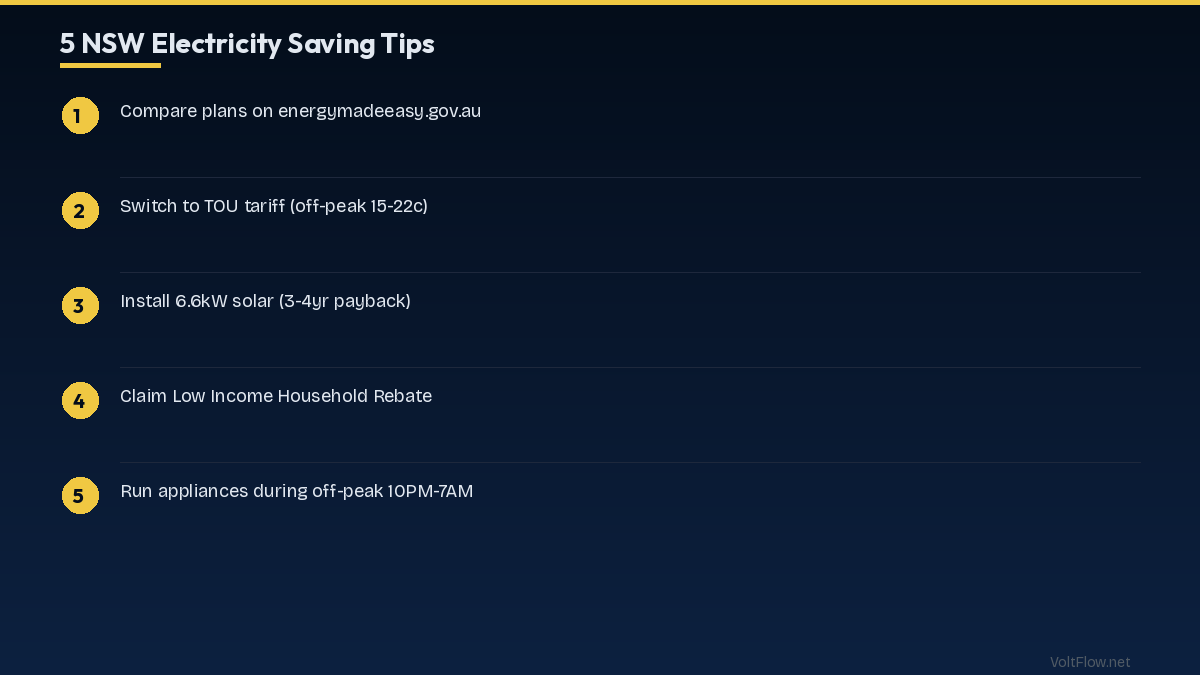
Compare plans on Energy Made Easy, switch to TOU tariff and shift usage to off-peak, install solar panels, and claim any eligible concessions. These steps can save A$500-1,500/year.
What is the DMO for NSW electricity?
The Default Market Offer is the maximum price retailers can charge on standing offers, set annually by the AER. Market offers are typically 15-25% below the DMO.
Is TOU tariff cheaper than flat rate in NSW?
TOU is 20-40% cheaper if you can shift 30-40% of usage to off-peak hours (10 PM-7 AM). If your usage is heavily concentrated during peak hours, flat rate may be safer.
What electricity concessions are available in NSW?
The Low Income Household Rebate (A$285/year) and Family Energy Rebate (A$180/year) are available. Medical energy rebates and hardship programs also exist.